
Often attributed to Richard Feynman
Software: EDM and Friends
To assist undestanding of experimental results, we work to develop code to help us understand the results as well as predict new phenomena to investigate experimentally. One major tool is our edm code which we use to determine structures just from electron diffraction data.
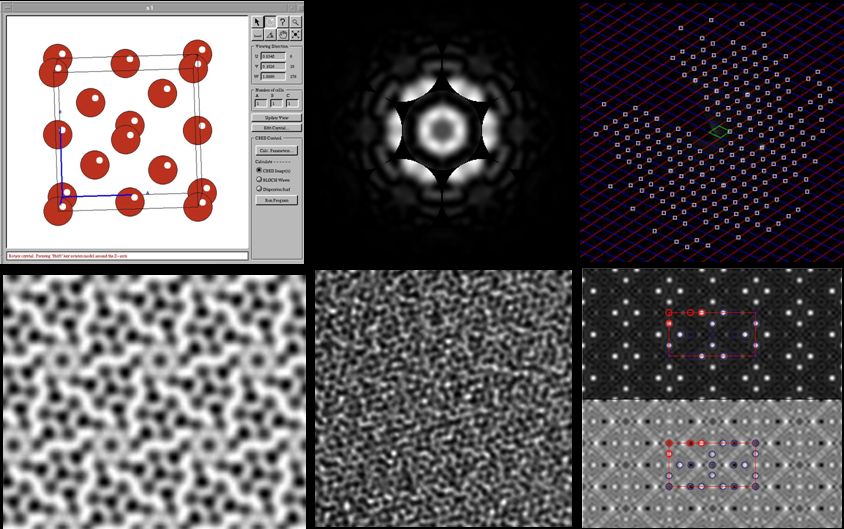
A brief guide to installing the code is available in software_install_guide.pdf. Some additional information is available in the edm page, although this may not be 100% up to date.
If you are unfamiliar with Linux, some notes can be found in Linux_Notes.
http://alumni.soe.ucsc.edu/~you/notes/cygwin-install.html#mozTocId125492
The best method is to download the latest EDM via anonymous cvs:
cvs -d:pserver:anonymous@129.105.208.198:/home/cvsroot checkout edm
Other key tools are:
-
Numis: code for calculating electron diffraction with DFT calculated electron densities or calculating precession electron diffraction intensities. This can be accessed by anonymous cvs:
cvs -d:pserver:anonymous@129.105.208.198:/home/cvsroot checkout Numis-2.0
- Semper: a portable image processing code. This can be accessed by cvs to the same site (cvs checkout semper-7.0beta)